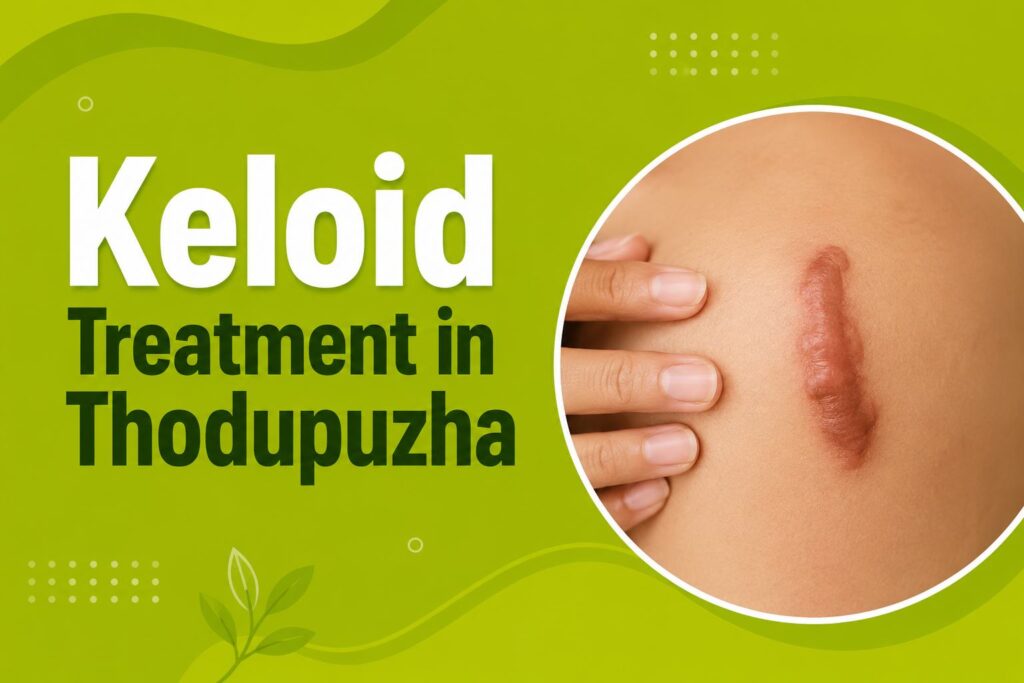
7 Proven Keloid Treatment in Thodupuzha Benefits & Care Guide
Keloid Treatment in Thodupuzha is an important option for people who experience raised scars that continue to grow beyond the original wound. While scars are a natural part of healing, keloids develop differently and may become larger, thicker, itchy, or uncomfortable over time. If you notice an abnormal scar after surgery, injury, burns, acne, or ear piercing, understanding the available treatment options can help you make informed decisions. Modern approaches focus on improving appearance, reducing discomfort, and lowering the chances of recurrence.
What Is Keloid Treatment in Thodupuzha
Keloid Treatment in Thodupuzha refers to medical procedures and therapies used to reduce the size, thickness, color, and symptoms of keloid scars. A keloid is an overgrowth of scar tissue that extends beyond the boundaries of the original wound due to excessive collagen production.
Unlike normal scars, keloids may continue growing for months or even years. They are not contagious or cancerous, but they can affect confidence, movement, and comfort depending on their size and location.
The primary goals of treatment include:
- Flattening the scar
- Reducing redness or discoloration
- Relieving itching and pain
- Improving cosmetic appearance
- Preventing recurrence
Understanding Keloids
A keloid develops when the body’s healing process becomes overactive. Instead of stopping once the wound heals, collagen continues to build up, creating a raised, firm scar.
Common characteristics include:
- Thick and elevated appearance
- Smooth or shiny surface
- Pink, red, brown, or darker color
- Gradual enlargement
- Itching or tenderness
- Firm texture
Keloids may develop weeks or months after the initial skin injury.
Common Causes of Keloids
Several factors may contribute to keloid formation.
Skin Injuries
Minor or major injuries may trigger excessive scar formation.
Examples include:
- Cuts
- Burns
- Surgical incisions
- Insect bites
- Vaccination scars
Acne
Severe acne lesions can leave behind raised keloid scars, especially on the chest and shoulders.
Ear Piercing
Ear piercings are among the most common causes of keloids, particularly on the earlobes.
Tattoos
Tattoo needles create tiny skin injuries that may trigger abnormal scar growth in susceptible individuals.
Genetic Factors
Some individuals naturally have a greater tendency to develop keloids due to inherited skin healing characteristics.
Types of Keloids
Small Keloids
Usually localized and cause minimal symptoms.
Large Keloids
These continue expanding and may become cosmetically significant.
Pedunculated Keloids
Attached by a narrow stalk.
Broad-Based Keloids
Wide scars covering larger skin surfaces.
Common Areas Where Keloids Develop
Keloids may appear almost anywhere on the body, but they are especially common on:
- Chest
- Shoulders
- Upper back
- Neck
- Earlobes
- Jawline
- Arms
These regions experience higher skin tension, making excessive scar formation more likely.
Symptoms That May Indicate a Keloid
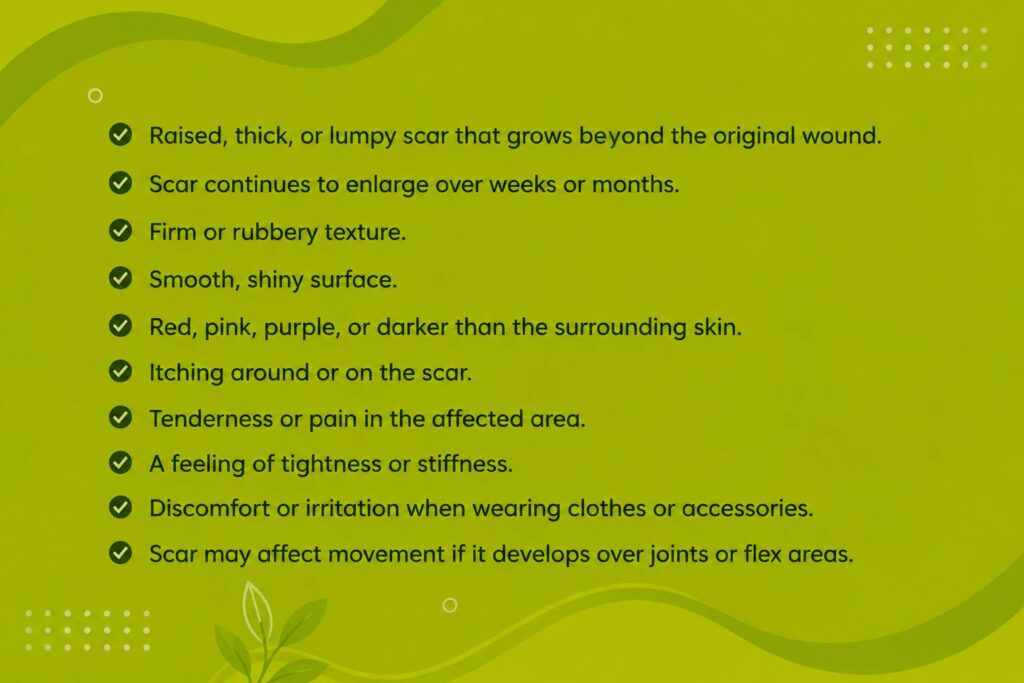
Recognizing symptoms early may help with timely evaluation.
Common symptoms include:
- Raised scar
- Firm texture
- Smooth appearance
- Continuous enlargement
- Itching
- Pain
- Burning sensation
- Tightness
- Cosmetic concerns
Some people experience discomfort while wearing clothing or jewelry if the keloid is located on exposed areas.
Who Is More Likely to Develop Keloids
Risk factors include:
- Family history
- Previous keloids
- Darker skin tones
- Younger age
- Frequent skin injuries
- Multiple piercings
- Acne-prone skin
Having one keloid increases the possibility of developing another after future injuries.
Why Early Evaluation Matters
Seeking timely care offers several advantages.
Early management may:
- Prevent excessive growth
- Reduce symptoms
- Improve cosmetic appearance
- Increase treatment success
- Reduce emotional distress
- Help select the most appropriate therapy
Smaller keloids are often easier to manage than large, longstanding scars.
Diagnosis Before Keloid Treatment in Thodupuzh
Most keloids are diagnosed through a clinical examination.
A healthcare professional may evaluate:
- Scar size
- Shape
- Texture
- Growth pattern
- Previous injuries
- Family history
- Symptoms
Occasionally, further evaluation may be recommended if another skin condition needs to be ruled out.
Available Options for Keloid Treatment in Thodupuzha
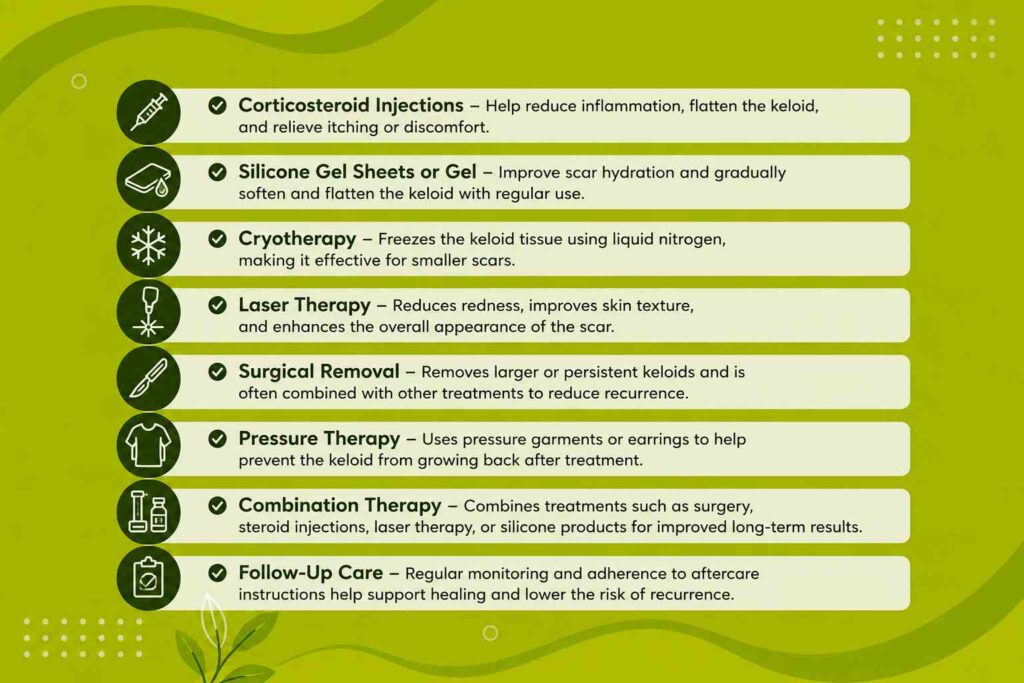
Modern scar management often combines multiple treatment methods for better outcomes.
Corticosteroid Injections
These injections help reduce inflammation and collagen production.
Benefits include:
- Flattening the scar
- Reducing itching
- Decreasing pain
- Softening tissue
Multiple sessions are commonly required.
Silicone Gel Sheets
Silicone therapy remains one of the most widely recommended conservative treatments.
Benefits include:
- Improved hydration
- Scar flattening
- Reduced itching
- Better scar appearance
Pressure Therapy
Pressure garments may help control scar growth, particularly after burns or surgery.
Cryotherapy
Liquid nitrogen freezes abnormal scar tissue.
Cryotherapy may:
- Reduce scar size
- Improve texture
- Work well for smaller keloids
Laser Therapy
Laser treatment helps improve scar appearance by reducing redness and enhancing skin texture.
Potential benefits include:
- Better skin color
- Smoother appearance
- Reduced thickness
- Improved confidence
Surgical Removal
Large or resistant keloids may require surgical excision.
Because surgery alone has a higher recurrence risk, it is often combined with additional therapies.
Combination Therapy
Many specialists recommend combining treatments such as:
- Surgery
- Steroid injections
- Silicone therapy
- Laser therapy
Combination treatment often produces better long-term results than a single treatment method.
Benefits of Keloid Treatment in Thodupuzha
Receiving appropriate care offers several advantages.
Benefits may include:
- Reduced scar size
- Improved skin appearance
- Less itching
- Reduced pain
- Better confidence
- Improved mobility
- Softer scar texture
- Lower recurrence risk with combined treatments
Recovery After Treatment
Recovery varies depending on the treatment used.
General expectations include:
- Mild redness
- Temporary swelling
- Minor tenderness
- Gradual improvement over several weeks
Following post-treatment instructions helps achieve better results.
Tips to Prevent Keloid Formation
Although prevention is not always possible, certain measures may reduce the risk.
Helpful tips include:
- Avoid unnecessary piercings if prone to keloids.
- Treat acne early.
- Protect wounds from infection.
- Avoid picking scabs.
- Use silicone products when recommended.
- Follow wound care instructions carefully.
- Protect healing skin from excessive sunlight.
- Attend follow-up appointments.
Skin Care After Keloid Treatment
Proper aftercare supports healing.
Recommended practices include:
- Keep the treated area clean.
- Avoid scratching.
- Apply prescribed medications.
- Wear silicone sheets if advised.
- Avoid unnecessary friction.
- Protect scars from UV exposure.
- Maintain good skin hydration.
Can Keloids Return
Yes. Keloids have a tendency to recur even after successful treatment.
However, recurrence risk may be reduced by:
- Combination therapy
- Regular follow-up
- Early intervention
- Proper scar care
- Following medical advice consistently
Long-term monitoring helps detect early recurrence.
Lifestyle Habits That Support Healthy Skin Healing
Healthy skin recovery involves more than treatment alone.
Good habits include:
- Eating protein-rich foods
- Drinking enough water
- Sleeping well
- Managing stress
- Avoiding smoking
- Maintaining good overall health
These habits support the body’s natural healing process.
When Should You Seek Medical Advice
You should consider evaluation if a scar:
- Continues growing
- Causes itching
- Becomes painful
- Restricts movement
- Bleeds frequently
- Changes rapidly
- Causes emotional distress
Early assessment often allows for more effective treatment planning.
Conclusion
Keloid Treatment in Thodupuzha offers several effective options for managing raised scars and improving both comfort and appearance. From silicone therapy and steroid injections to laser procedures and combination treatments, modern scar management aims to reduce symptoms while minimizing recurrence. Early evaluation, proper aftercare, and consistent follow-up can significantly improve long-term outcomes. If you have a scar that continues to grow or causes discomfort, timely medical assessment can help determine the most suitable treatment approach for healthier skin in Thodupuzha. Learn more about keloids, their causes, symptoms, and treatment options from the American Academy of Dermatology .
Frequently Asked Questions
What is a keloid
A keloid is an overgrowth of scar tissue that extends beyond the original wound.
Is Keloid Treatment in Thodupuzha painful
Most treatments involve minimal discomfort, and pain is generally manageable.
Can keloids disappear naturally
Most keloids do not disappear without treatment.
Who is at higher risk of developing keloids
People with a family history, darker skin tones, or previous keloids have a higher risk.
Can acne cause keloids
Yes. Severe acne may lead to keloid scar formation in susceptible individuals.
How many treatment sessions are usually required
The number varies depending on the scar size, location, and treatment method.
Can keloids come back after treatment
Yes, recurrence is possible, but combination therapy may reduce the risk.
Is surgery always necessary
No. Many keloids can be managed with non-surgical treatments.
Are silicone sheets effective
Silicone sheets are widely used to improve scar appearance and reduce symptoms.
When should I seek treatment for a keloid
You should seek evaluation if the scar continues growing, becomes painful, itchy, or affects your daily life.

Dr. Thara Augustine
M.Ch. (Plastic Surgery), DrNB (Plastic Surgery), MRCS (Edinburgh), DNB (General Surgery), MS (General Surgery), MBBS
Smita Memorial Hospital and Research Centre, Thodupuzha, Idukki