
Who Needs Axillary Breast Surgery? 7 Essential Signs to Know
Who needs axillary breast surgery? This is an important question for people who experience swelling, pain, fullness, or unwanted tissue in the underarm area. Accessory breast tissue may remain unnoticed for years, but hormonal changes, pregnancy, weight fluctuations, or ageing can make it more visible. People considering treatment in Thodupuzha may benefit from understanding the symptoms, evaluation process, and available surgical options before making a decision.
Axillary breast surgery is generally considered when accessory breast tissue causes physical discomfort, restricts movement, creates repeated skin problems, or affects a person’s confidence. However, not every underarm lump or area of fullness requires surgery. A proper medical assessment is necessary to identify the tissue and determine whether surgical removal is suitable.
This guide explains who may need the procedure, the seven main signs that may indicate treatment, the causes and types of accessory breast tissue, surgical methods, benefits, recovery, and frequently asked questions.
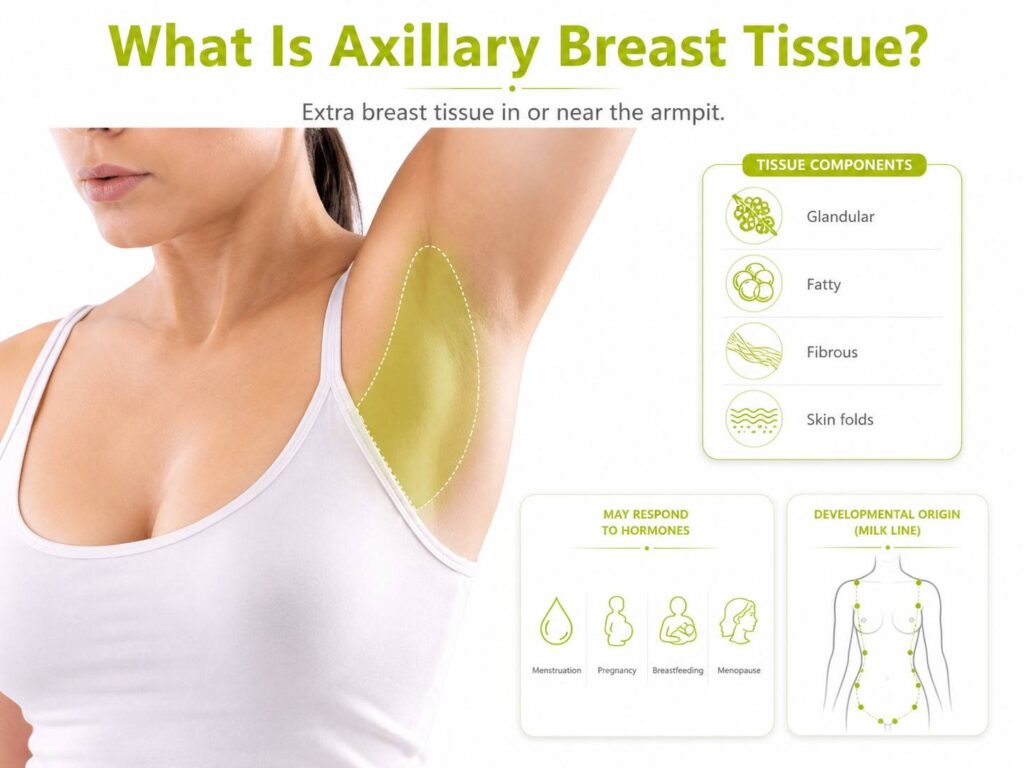
What Is Axillary Breast Tissue?
Axillary breast tissue is additional breast tissue that develops in or near the armpit. It is also known as accessory breast tissue, ectopic breast tissue, or supernumerary breast tissue.
During early development, breast tissue forms along an area called the embryonic milk line. This line extends from the armpit towards the groin. Normally, most of the tissue along this line disappears before birth, leaving breast tissue only on the chest.
When part of the milk line does not completely disappear, accessory breast tissue may remain. The armpit is one of the most common places where it develops.
The tissue may contain:
- Glandular breast tissue
- Fatty tissue
- Fibrous or connective tissue
- Skin folds
- An accessory nipple or areola in some cases
- A combination of glandular and fatty tissue
Because glandular accessory tissue responds to hormones, it may become larger, tender, or swollen during menstruation, pregnancy, breastfeeding, or menopause.
Who Needs Axillary Breast Surgery?
Who needs axillary breast surgery depends mainly on the symptoms, tissue type, size, and effect on everyday life. Surgery is not automatically required simply because accessory tissue is present.
Some individuals have small areas of tissue that cause no pain or visible changes. In such situations, medical observation may be sufficient. Others experience increasing discomfort, repeated swelling, difficulty moving the arm, or dissatisfaction with the shape of the underarm.
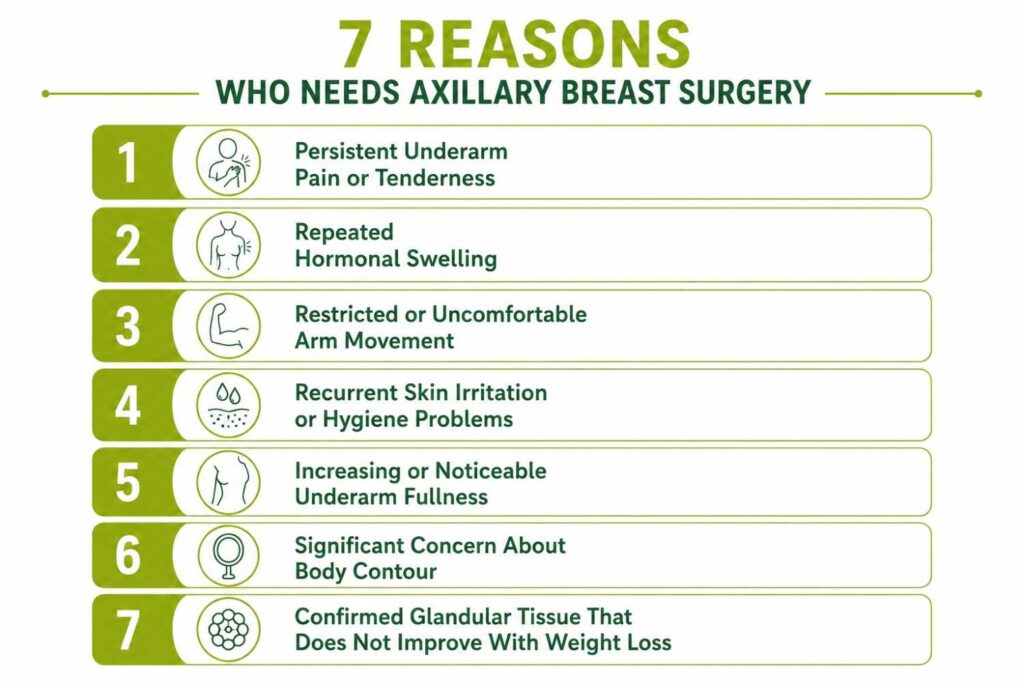
A surgeon may consider removal when the benefits of treatment are likely to outweigh the possible risks. The following seven signs explain who may be an appropriate candidate.
7 Signs That May Indicate Who Needs Axillary Breast Surgery
1. Persistent Underarm Pain or Tenderness
Persistent discomfort is one of the main reasons people seek an evaluation for axillary breast tissue.
The tissue may feel painful, sore, heavy, or tender. Some people notice discomfort every day, while others experience pain mainly during hormonal changes.
Pain may become more noticeable during:
- Menstrual periods
- Pregnancy
- Breastfeeding
- Exercise
- Arm movement
- Pressure from tight clothing
- Sleeping on the affected side
Occasional mild tenderness may not require surgery. However, recurring or persistent pain that interferes with daily life may help determine who needs axillary breast surgery.
Before recommending treatment, the doctor may examine the area and request imaging to rule out other causes of underarm pain.
2. Repeated Hormonal Swelling
Accessory breast tissue can respond to hormones in the same way as breast tissue on the chest. It may enlarge or become tender during menstrual cycles, pregnancy, or breastfeeding.
Some individuals first notice the condition during puberty. Others become aware of it only after pregnancy, when the tissue becomes more prominent.
Hormonal swelling may cause:
- Increased underarm fullness
- Tenderness before menstruation
- A heavy sensation
- Temporary enlargement during pregnancy
- Discomfort while breastfeeding
- Changes in the fit of clothing
Repeated swelling can stretch the surrounding skin and make the area increasingly visible. When hormonal changes cause regular physical discomfort, surgical removal may be discussed.
3. Restricted or Uncomfortable Arm Movement
Another factor in deciding who needs axillary breast surgery is whether the tissue affects arm movement.
Large or bulky tissue in the armpit may create friction when the arm moves against the side of the body. Activities such as lifting, stretching, exercising, driving, or carrying objects may become uncomfortable.
Some individuals experience:
- Tightness while lifting the arm
- Pulling sensations
- Rubbing between the arm and chest
- Pain during exercise
- Difficulty performing overhead movements
- Discomfort while wearing fitted sleeves
Removing the excess tissue may improve mobility when the restriction is directly related to accessory breast tissue. A clinical examination helps confirm whether surgery is likely to relieve the problem.
4. Recurrent Skin Irritation or Hygiene Problems
Skin folds created by axillary tissue may trap sweat and moisture. This can cause repeated irritation, especially in warm weather or during physical activity.
Common skin-related concerns include:
- Redness
- Chafing
- Itching
- Rashes
- Excessive sweating
- Unpleasant odour
- Fungal irritation
- Darkening of the skin
- Difficulty keeping the fold dry
Simple measures such as wearing loose clothing, drying the area carefully, and using medically advised skin products may help mild symptoms.
However, repeated irritation that continues despite proper care may indicate who needs axillary breast surgery. Removing the tissue and reducing the fold can make the area easier to clean and keep dry.
5. Increasing or Noticeable Underarm Fullness
Some accessory breast tissue remains small and stable. In other cases, it becomes increasingly prominent because of weight gain, pregnancy, hormonal changes, or ageing.
The fullness may appear as:
- A soft underarm bulge
- A firm area of glandular tissue
- Unevenness between the two sides
- A visible fold above a bra or garment
- Tissue that extends towards the chest or upper arm
Not every visible bulge is accessory breast tissue. Underarm fullness can also result from fat deposits, enlarged lymph nodes, cysts, lipomas, or other conditions.
Therefore, diagnosis is important before treatment. When accessory tissue is confirmed and continues to enlarge or become more noticeable, removal may be considered.
6. Significant Concern About Body Contour
Who needs axillary breast surgery may also include people whose accessory tissue causes ongoing concern about body contour.
The tissue may be especially visible while wearing sleeveless clothing, fitted tops, bras, swimwear, or exercise clothing. Some individuals repeatedly adjust their clothing to hide the area or avoid particular styles altogether.
Body contour concerns alone do not mean surgery is medically necessary. However, they are valid factors when they are persistent, realistic, and discussed carefully during consultation.
A suitable candidate should understand that:
- Surgery can improve the underarm contour.
- Complete symmetry cannot always be guaranteed.
- A scar will remain, although it may fade.
- Swelling may temporarily affect the early result.
- The final contour develops gradually during healing.
The decision should be based on personal comfort rather than pressure from another person.
7. Confirmed Glandular Tissue That Does Not Improve With Weight Loss
Fatty fullness in the underarm may reduce when a person loses weight. Glandular accessory breast tissue usually does not disappear through diet or exercise.
This distinction is important when evaluating who needs axillary breast surgery.
Glandular tissue may feel firmer than ordinary fat and can remain even when body weight changes. It may also swell or become painful during hormonal cycles.
Imaging and physical examination help determine whether the area contains:
- Mostly fatty tissue
- Mostly glandular tissue
- Loose skin
- A combination of tissue types
When confirmed glandular tissue causes symptoms or contour concerns, surgical excision may be more effective than weight-loss methods or liposuction alone.
Types of Axillary Breast Tissue
The type of tissue affects the treatment method and expected outcome.
Fat-Predominant Tissue
This consists mainly of fatty tissue. It may feel soft and may be treated with liposuction in selected cases.
Glandular Accessory Breast Tissue
This contains breast glands and may respond to hormonal changes. Direct surgical excision is often required because liposuction cannot reliably remove firm glandular tissue.
Mixed Axillary Tissue
Mixed tissue contains both fat and breast glands. A combination of liposuction and surgical excision may provide better contouring.
Accessory Tissue With Loose Skin
Large or long-standing tissue may stretch the skin. Skin removal may be needed along with tissue removal.
Accessory Nipple or Areola
Some people have an additional nipple, areola, or both along the milk line. Treatment depends on symptoms and personal preference.
Symptoms That Should Be Medically Evaluated
Most accessory breast tissue is benign. However, any new or changing underarm lump should be evaluated rather than assumed to be harmless.
Seek medical assessment for:
- A new underarm lump
- Rapid enlargement
- A hard or fixed mass
- Persistent one-sided pain
- Skin dimpling
- Nipple-like discharge from accessory tissue
- Unexplained redness
- Swollen lymph nodes
- A change in the shape or texture of the area
- Symptoms that continue outside hormonal cycles
An examination helps distinguish accessory tissue from lymph-node enlargement, cysts, infections, lipomas, or other breast-related conditions.
Benefits for People Who Need Axillary Breast Surgery
Potential benefits include:
- Reduced pain and tenderness
- Less hormonal swelling
- Improved arm movement
- Reduced rubbing and chafing
- Easier hygiene
- A smoother underarm contour
- Better fit of bras and clothing
- Relief from heaviness
- Removal of persistent glandular tissue
- Greater comfort during physical activity
Results vary depending on tissue size, skin elasticity, surgical technique, healing, and individual anatomy.
Conclusion
Who needs axillary breast surgery? The procedure may be suitable for people with persistent pain, repeated hormonal swelling, restricted arm movement, skin irritation, increasing underarm fullness, significant contour concerns, or glandular tissue that does not improve with weight loss. A medical examination and appropriate imaging are essential because not every underarm lump is accessory breast tissue. Treatment should be based on symptoms, tissue type, health, and realistic expectations. Individuals seeking evaluation in Thodupuzha should discuss the available techniques, scar placement, recovery period, possible risks, and expected results with a qualified surgeon.
Learn more about breast health, diagnosis, and treatment options through the National Cancer Institute’s comprehensive breast cancer resource. National Cancer Institute (NCI) Breast Cancer Guide
FREQUENTLY ASKED QUESTIONS

Dr. Thara Augustine
M.Ch. (Plastic Surgery), DrNB (Plastic Surgery), MRCS (Edinburgh), DNB (General Surgery), MS (General Surgery), MBBS
Smita Memorial Hospital and Research Centre, Thodupuzha, Idukki