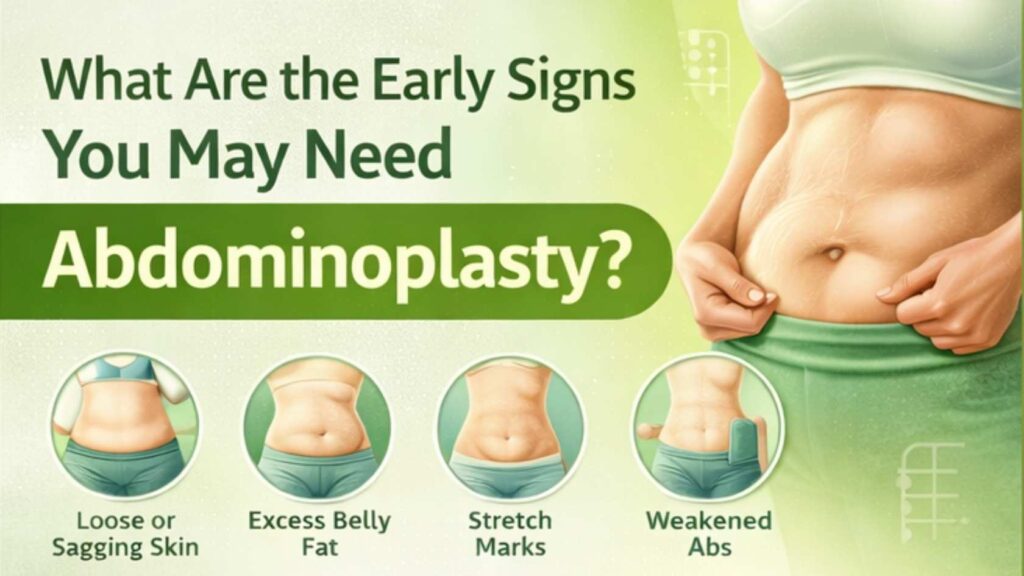
What Are the Early Signs You May Need Abdominoplasty: Symptoms and Warning Signs
Early signs you may need abdominoplasty often appear after pregnancy, major weight loss, or aging when the abdomen develops loose skin, muscle separation, or stubborn fat that does not respond to diet and exercise.
Many individuals begin considering this procedure after experiencing body changes caused by pregnancy, significant weight loss, or natural aging.
Understanding the early signs that may indicate the need for abdominoplasty helps individuals determine whether a consultation for abdominal contouring may be appropriate. These signs often involve physical changes in the abdomen that cannot be corrected through lifestyle efforts alone.
Persistent Loose or Sagging Abdominal Skin
One of the earliest and most noticeable signs is loose or hanging abdominal skin. This condition often occurs after major weight loss or pregnancy when the skin stretches beyond its natural ability to return to its original shape.
The excess skin may appear as a soft fold or “apron” of tissue across the lower abdomen. Even with regular exercise and weight management, the skin may remain stretched because its elasticity has been reduced.
In some cases, loose skin can cause practical concerns such as:
Skin irritation in the folds
Difficulty maintaining hygiene
Rashes or redness in the abdominal crease
Discomfort during physical activity
When skin laxity becomes persistent and causes both aesthetic and physical concerns, abdominoplasty may be considered to remove the excess tissue.
Abdominal Muscle Separation
Another common early sign is separation of the abdominal muscles, medically known as diastasis recti. This condition often develops during pregnancy when the growing uterus stretches the abdominal wall.
Instead of returning to their normal position after childbirth, the abdominal muscles may remain separated. This can create a visible bulge or soft protrusion in the center of the abdomen.
Typical indicators of muscle separation include:
A persistent abdominal bulge despite weight loss
A “doming” appearance when sitting up or performing abdominal exercises
A noticeable gap between the abdominal muscles
Muscle separation cannot usually be corrected with exercise alone. Abdominoplasty can restore the strength and alignment of the abdominal muscles, improving both function and appearance.
Stubborn Abdominal Fat That Does Not Respond to Exercise
Many individuals who consider abdominoplasty are already close to their desired body weight but struggle with localized fat deposits in the abdomen.
Despite consistent diet and physical activity, the midsection may continue to appear protruding or uneven due to stubborn fat pockets.
Signs of resistant abdominal fat may include:
A persistent lower belly bulge
Difficulty flattening the abdomen with exercise
Fat deposits concentrated in the midsection
While liposuction may address fat alone, abdominoplasty can address both fat and loose skin while tightening the abdominal muscles for a more complete contour improvement.
Chronic Lower Back Pain or Poor Core Support
Weak abdominal muscles may contribute to functional problems beyond cosmetic concerns. The abdominal wall plays a key role in supporting posture and stabilizing the core.
When the muscles are stretched or separated, individuals may experience:
Chronic lower back pain
Difficulty maintaining upright posture
Weakness during lifting or daily activities
In some cases, weakened abdominal tissue may even contribute to the development of hernias, where internal tissue pushes through the abdominal wall.
By tightening the abdominal muscles, abdominoplasty can improve core stability and support better posture.
Early Signs You May Need Abdominoplasty After Pregnancy or Weight Loss
Pregnancy can significantly affect the abdominal area. The skin stretches, muscles expand, and fat distribution changes to accommodate the growing baby.
After childbirth, some women notice that their abdomen does not return to its previous shape. Common post-pregnancy changes include:
Loose or wrinkled abdominal skin
Persistent lower belly bulge
Muscle separation
Changes in waistline definition
For individuals who have completed their family planning and wish to restore abdominal firmness, abdominoplasty may be considered as a body contouring option.
Changes After Major Weight Loss
People who experience significant weight loss often achieve remarkable improvements in health but may be left with excess skin around the abdomen.
This occurs because the skin may not fully contract after rapid or large weight reduction.
Typical signs include:
Hanging abdominal skin
Loose folds around the waistline
Difficulty fitting into clothing despite weight loss
Abdominoplasty can remove excess skin and help reshape the abdomen after weight loss.
Emotional and Confidence-Related Signs
While physical symptoms are important indicators, emotional factors also play a role in deciding whether to consider abdominoplasty.
Some individuals may feel self-conscious about their abdominal appearance, especially when wearing certain clothing or participating in activities such as swimming.
Common emotional signs may include:
Avoiding fitted clothing
Feeling uncomfortable with body appearance
Lack of confidence despite healthy lifestyle efforts
Improving abdominal contour can sometimes help individuals feel more comfortable and confident in their daily lives.
General Characteristics of Suitable Candidates
Individuals who consider abdominoplasty are often those who:
Maintain a stable body weight
Have completed family planning
Do not smoke or are willing to stop smoking
Have realistic expectations about surgical outcomes
A thorough medical consultation is important to determine whether the procedure is suitable based on individual health and goals.
Understanding the Importance of Early Awareness
Recognizing the early signs of abdominal skin laxity, muscle separation, or stubborn fat can help individuals make informed decisions about treatment options. Early awareness allows people to explore possible solutions and seek professional evaluation when necessary.
Because every body is different, treatment decisions should always be based on personal goals, health considerations, and professional medical advice.
Final Thoughts
Abdominoplasty is designed to address excess abdominal skin, weakened muscles, and stubborn fat that cannot be corrected through lifestyle changes alone. Early signs such as sagging skin, persistent abdominal bulge, muscle separation, and functional discomfort may indicate that a consultation for abdominal contouring could be helpful.
Recognizing the early signs you may need abdominoplasty can help individuals decide when to seek professional consultation for abdominal contour improvement.
Frequently Asked Questions
1. What is abdominoplasty?
Abdominoplasty, commonly called a tummy tuck, is a surgical procedure that removes excess abdominal skin, tightens weakened muscles, and improves the overall contour of the abdomen.
2. What are the early signs that someone may need abdominoplasty?
Common early signs include loose abdominal skin, muscle separation after pregnancy, stubborn belly fat, poor skin elasticity, and changes in abdominal shape after weight loss.
3. Can exercise fix loose abdominal skin?
Exercise can strengthen muscles but cannot remove excess loose skin once the skin has lost its elasticity.
4. What is diastasis recti and how does it relate to abdominoplasty?
Diastasis recti is the separation of abdominal muscles, often after pregnancy. Abdominoplasty can repair this separation and restore abdominal support.
5. Is abdominoplasty only for people who lost a lot of weight?
No. It may also be considered by individuals who experience abdominal changes after pregnancy, aging, or stubborn fat that does not respond to lifestyle changes.
6. Does abdominoplasty help with posture or back pain?
In some cases, tightening weakened abdominal muscles can improve core support and may help reduce lower back discomfort.
7. Is abdominoplasty a weight-loss procedure?
No. Abdominoplasty is a body contouring procedure designed to improve abdominal shape rather than reduce overall body weight.
8. When should someone consider a consultation for abdominoplasty?
A consultation may be considered when loose skin, abdominal bulging, or muscle weakness persists despite healthy diet and exercise.
9. Can pregnancy affect the results of abdominoplasty?
Yes. Future pregnancies may stretch the abdominal muscles again, which is why the procedure is often recommended after completing family planning.
10. Are the results of abdominoplasty permanent?
Results can be long-lasting when body weight remains stable and healthy lifestyle habits are maintained.

Dr. Thara Augustine
M.Ch. (Plastic Surgery), DrNB (Plastic Surgery), MRCS (Edinburgh), DNB (General Surgery), MS (General Surgery), MBBS
Smita Memorial Hospital and Research Centre, Thodupuzha, Idukki