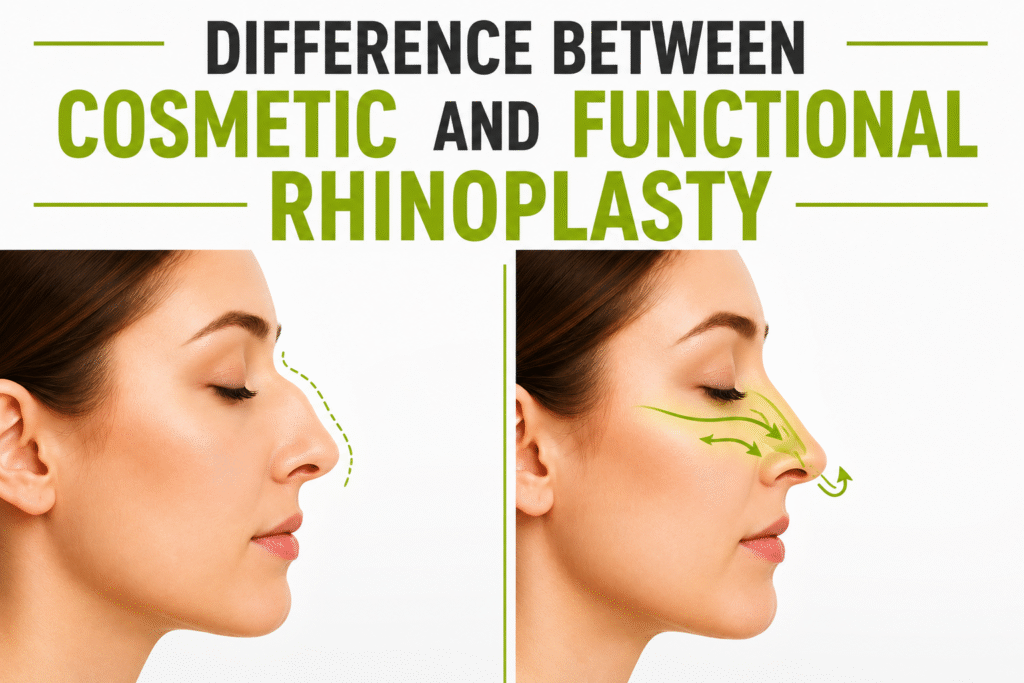
Difference between cosmetic and functional rhinoplasty is an important topic for individuals considering nose surgery. The nose is one of the most prominent features of the face and plays a vital role in breathing. Rhinoplasty is a surgical procedure that can alter the shape, structure, or function of the nose. However, not all rhinoplasty procedures are performed for the same reason. Some are intended to improve appearance, while others are performed to address breathing difficulties and structural abnormalities.
Understanding Rhinoplasty
Rhinoplasty is a surgical procedure designed to reshape or reconstruct the nose. It can involve modifying bone, cartilage, skin, or a combination of these structures to achieve a desired result.
The procedure is generally categorized into two main types:
- Cosmetic rhinoplasty
- Functional rhinoplasty
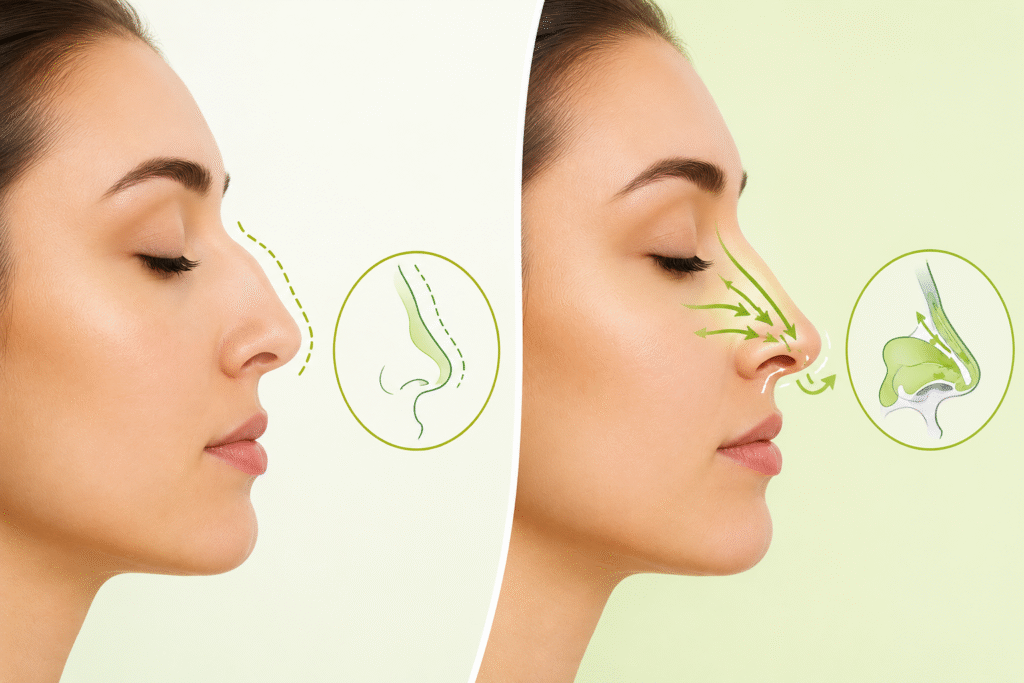
While both procedures involve surgical changes to the nose, the primary objective of each type is different. Cosmetic rhinoplasty focuses on appearance, whereas functional rhinoplasty focuses on improving nasal function and airflow.
What Is Cosmetic Rhinoplasty
Cosmetic rhinoplasty is a procedure performed to improve the appearance of the nose. The goal is to create better facial harmony and balance while addressing specific aesthetic concerns.
Many individuals choose cosmetic rhinoplasty because they are unhappy with certain aspects of their nose’s appearance. The procedure is tailored to each person’s facial features and desired outcome.
Common cosmetic concerns include:
- A prominent nasal hump
- A wide or broad nose
- A drooping nasal tip
- A bulbous tip
- A crooked nose
- Uneven nostrils
- Excessively large or small nasal structures
- Facial imbalance caused by nasal shape
Cosmetic rhinoplasty is generally considered an elective procedure because it is performed primarily for aesthetic enhancement rather than medical necessity.
What Is Functional Rhinoplasty
Functional rhinoplasty is performed to improve the way the nose functions. The primary objective is to restore or enhance airflow through the nasal passages and address structural issues that interfere with breathing.
Many people experience breathing difficulties due to congenital abnormalities, injuries, aging-related changes, or previous nasal surgeries. Functional rhinoplasty focuses on correcting these issues to improve daily comfort and quality of life.
Common conditions treated through functional rhinoplasty include:
- Deviated nasal septum
- Nasal valve collapse
- Congenital nasal deformities
- Nasal trauma
- Chronic nasal obstruction
- Structural narrowing of the nasal airway
Unlike cosmetic rhinoplasty, functional rhinoplasty is often considered medically necessary when breathing problems significantly affect normal activities.
Primary Goals of Cosmetic Rhinoplasty
The primary purpose of cosmetic rhinoplasty is aesthetic improvement. Surgeons carefully evaluate facial proportions and nasal characteristics to create a result that complements the rest of the face.
Goals may include:
- Refining nasal contours
- Improving facial symmetry
- Creating a more balanced profile
- Reshaping the nasal tip
- Adjusting nose size
- Reducing visible bumps or irregularities
Cosmetic rhinoplasty is highly individualized because perceptions of beauty and personal preferences vary from one person to another.
Primary Goals of Functional Rhinoplasty
Functional rhinoplasty focuses on improving nasal performance rather than appearance.
Its goals may include:
- Increasing airflow through the nasal passages
- Correcting structural blockages
- Improving breathing during exercise
- Reducing nasal congestion caused by anatomical issues
- Enhancing sleep quality
- Restoring normal nasal function after trauma
Although appearance may improve as a secondary result, the primary focus remains functional restoration.
Common Reasons People Choose Cosmetic Rhinoplasty
Individuals may seek cosmetic rhinoplasty for a variety of personal reasons.
Some common motivations include:
Dissatisfaction with Nose Shape
Many people feel their nose is too large, too small, too wide, or not proportionate to other facial features.
Facial Harmony
A well-balanced nose can contribute to overall facial symmetry and proportion.
Visible Nasal Hump
One of the most common cosmetic concerns is a hump or bump along the nasal bridge.
Nasal Tip Concerns
Some individuals wish to correct a drooping, bulbous, or overly prominent nasal tip.
Previous Unsatisfactory Appearance
Some patients seek cosmetic refinement after injury or developmental changes that affect nasal appearance.
Common Reasons People Need Functional Rhinoplasty
Functional rhinoplasty is often recommended when structural abnormalities interfere with normal breathing.
Deviated Septum
A deviated septum occurs when the wall dividing the nasal passages is displaced to one side, causing airflow restriction.
Nasal Valve Collapse
The nasal valve is a critical area responsible for regulating airflow. Weakness or collapse in this region can significantly impair breathing.
Nasal Trauma
Sports injuries, accidents, or fractures can alter nasal anatomy and create functional problems.
Congenital Structural Issues
Some individuals are born with nasal abnormalities that affect breathing.
Previous Surgery Complications
Occasionally, prior nasal surgeries may result in structural weakness or airflow problems that require correction.
Surgical Techniques Used in Cosmetic Rhinoplasty
Cosmetic rhinoplasty may involve several techniques depending on the desired changes.
Common surgical modifications include:
- Removing or reducing a dorsal hump
- Refining the nasal tip
- Narrowing the nasal bridge
- Reshaping cartilage
- Adjusting nostril size
- Correcting asymmetry
Surgeons aim to create natural-looking results that fit the patient’s facial characteristics.
Surgical Techniques Used in Functional Rhinoplasty
Functional rhinoplasty often involves reconstructive techniques designed to support airflow and structural stability.
Procedures may include:
- Septal correction
- Cartilage graft placement
- Nasal valve repair
- Structural reinforcement
- Airway expansion procedures
- Reconstruction following trauma
The objective is to create a stable nasal framework that allows efficient breathing.
Cosmetic Changes Versus Functional Improvements
One of the most important distinctions between the two procedures lies in the expected outcome.
Cosmetic Rhinoplasty Outcomes
Expected improvements include:
- Enhanced facial appearance
- Better symmetry
- Refined nasal contours
- Improved profile balance
Functional Rhinoplasty Outcomes
Expected improvements include:
- Easier breathing
- Reduced nasal obstruction
- Improved airflow
- Better exercise tolerance
- Enhanced sleep quality
While cosmetic outcomes are measured visually, functional outcomes are measured by improvements in nasal performance and patient comfort.
Can Cosmetic and Functional Rhinoplasty Be Performed Together
Yes. In many situations, cosmetic and functional rhinoplasty are combined into a single surgical procedure.
For example, a person may have:
- A deviated septum causing breathing difficulties
- A noticeable nasal hump affecting appearance
In such cases, both concerns can often be addressed during one operation.
Benefits of combining procedures may include:
- One recovery period
- Comprehensive correction
- Reduced overall surgical exposure
- Improved function and appearance simultaneously
A thorough evaluation helps determine whether a combined approach is appropriate.
Recovery After Cosmetic and Functional Rhinoplasty
Recovery experiences vary depending on the extent of surgery and individual healing characteristics.
Common recovery experiences include:
- Swelling
- Mild discomfort
- Bruising around the eyes
- Temporary nasal congestion
- Sensitivity around the nose
Most individuals can resume many normal daily activities within a few weeks, although complete healing may take several months.
Swelling gradually decreases over time, and final results become more apparent as healing progresses.
Factors Considered Before Surgery
Several factors are evaluated before proceeding with rhinoplasty.
These may include:
- Overall health
- Nasal anatomy
- Breathing function
- Skin thickness
- Facial proportions
- Previous surgeries
- Personal goals and expectations
A detailed assessment helps identify whether cosmetic, functional, or combined rhinoplasty is most appropriate.
Importance of Realistic Expectations
Whether undergoing cosmetic or functional rhinoplasty, realistic expectations are important.
Cosmetic rhinoplasty aims to enhance facial balance rather than create perfection. Functional rhinoplasty aims to improve breathing but may not completely eliminate every nasal symptom.
Clear communication regarding goals and expected outcomes can contribute to greater satisfaction with the procedure.
Who Is a Suitable Candidate
A person may be considered a suitable candidate for cosmetic rhinoplasty if they:
- Are concerned about nasal appearance
- Have completed facial growth
- Are in good overall health
- Have realistic expectations
A person may be considered a suitable candidate for functional rhinoplasty if they:
- Experience chronic breathing difficulties
- Have structural nasal abnormalities
- Suffer from airflow obstruction
- Have symptoms related to nasal dysfunction
A comprehensive evaluation helps determine the most suitable treatment plan.
Conclusion
Understanding the difference between cosmetic and functional rhinoplasty can help individuals make informed decisions about nasal surgery. Cosmetic rhinoplasty focuses on improving the appearance of the nose and enhancing facial harmony, while functional rhinoplasty is designed to correct structural problems and improve breathing. Although the objectives differ, both procedures aim to improve overall quality of life. In many cases, cosmetic and functional concerns can be addressed together, providing both aesthetic enhancement and better nasal function. For more information about rhinoplasty and nasal surgery, you can visit the Mayo Clinic , which explains the procedure, reasons for surgery, potential risks, and recovery process.
Frequently Asked Questions
What is the difference between cosmetic and functional rhinoplasty
Cosmetic rhinoplasty focuses on improving the appearance of the nose, while functional rhinoplasty is performed to correct structural issues that affect breathing and nasal function.
Can cosmetic and functional rhinoplasty be performed together
Yes. Many patients undergo a combined procedure that improves both the appearance of the nose and its ability to function properly.
Who is a good candidate for cosmetic rhinoplasty
Individuals who are unhappy with the size, shape, symmetry, or overall appearance of their nose may be suitable candidates for cosmetic rhinoplasty.
Who may need functional rhinoplasty
People experiencing chronic nasal blockage, breathing difficulties, nasal valve collapse, or structural abnormalities may benefit from functional rhinoplasty.
Does functional rhinoplasty change the appearance of the nose
Functional rhinoplasty primarily aims to improve breathing, but some changes in nasal appearance may occur depending on the correction required.
Is rhinoplasty a permanent procedure
The results of rhinoplasty are generally long-lasting, although natural aging and other factors can influence the nose over time.
How long does recovery take after rhinoplasty
Most patients can return to normal daily activities within a few weeks, but complete healing and final results may take several months to become fully visible.
Is functional rhinoplasty only performed after an injury
No. Functional rhinoplasty may also be performed to correct congenital abnormalities, a deviated septum, nasal valve issues, or other structural problems affecting airflow.
Will rhinoplasty improve breathing problems
Functional rhinoplasty is specifically designed to improve nasal airflow and breathing when structural issues are the cause of the problem.
How do I know whether I need cosmetic or functional rhinoplasty
A detailed evaluation of your nasal structure, breathing function, and personal goals can help determine whether cosmetic rhinoplasty, functional rhinoplasty, or a combination of both is appropriate.

Dr. Thara Augustine
M.Ch. (Plastic Surgery), DrNB (Plastic Surgery), MRCS (Edinburgh), DNB (General Surgery), MS (General Surgery), MBBS
Smita Memorial Hospital and Research Centre, Thodupuzha, Idukki